
One Nation. One Indigenous Identity. One Flag.
India is one of the most culturally diverse countries in the world. It is home to hundreds of communities, languages, traditions, and cultures that together form the identity of our nation. Among these communities are the Indigenous Tribal People of India—known as Adivasis—who have lived in harmony with nature for thousands of years and have preserved their unique customs, languages, and cultural heritage.
However, despite being recognized as Scheduled Tribes under the Constitution of India, the tribal people have historically been identified through their individual tribes, clans, or geographical regions rather than as one united Indigenous community.
Before India’s independence, tribal communities were known by their respective regions and identities—Bhil, Gamit, Garasia, Vasava, Rathwa, Gond, Santhal, Munda, Khasi, Naga, Toda, and many others. Each community carried its own rich traditions, yet there was no single identity that represented all Indigenous people of India collectively.
Today, while every tribe proudly preserves its own customs and heritage, there is an increasing realization that all tribal communities share common ancestral values, a deep connection with nature, and a collective Indigenous heritage.
This vision inspired the creation of the India Indigenous Flag—a symbol that represents every tribal community of India under one banner while respecting the uniqueness of every individual tribe and clan.
The Vision Behind the India Indigenous Flag
The idea of creating a common Indigenous Flag for all tribal communities of India originated from Mr. Praful C. Patel, a respected tribal community leader from South Gujarat and an active member of Samast Adivasi Samaj Sangathan, Surat.
Mr. Praful C. Patel strongly believed that although tribal communities belong to different geographical regions and possess diverse cultures, they all belong to one Indigenous family of India. His vision was not to replace individual tribal identities but to unite every tribal community under one common symbol that could proudly represent India’s Indigenous people at the national and international level.
Mr. Praful C. Patel strongly believed that although tribal communities belong to different geographical regions and possess diverse cultures, they all belong to one Indigenous family of India. His vision was not to replace individual tribal identities but to unite every tribal community under one common symbol that could proudly represent India’s Indigenous people at the national and international level.
To transform this vision into reality, the artistic design of the flag was created by renowned Tribal Artist Mr. Hitalkumar Patel, working under the conceptual guidance of Mr. Praful C. Patel.
Leadership That Made History
The India Indigenous Flag was formally approved and supported by the leadership of Samast Adivasi Samaj, Surat, including:
President (Adhyaksh)
Mr. G. V. Kokani
General Secretary (Mantri)
Mr. Jayantibhai Pawar
Treasurer
Mr. Kantibhai F. Kunbi
along with the valuable guidance and support of:
- Mr. Maganbhai Rathod
- Mr. Dineshbhai Dhodiya
- Mr. Vinodbhai Patel
- Mr. Chandrakantbhai Patel
- Mr. Babubhai Gamit
- Mr. Ramanbhai Nayaka
- Mr. Chimanbhai Vasava
- Mr. Ashokbhai Patel
- Mr. Hiteshbhai Mundwada
- Mr. Ankit Patel
- Mr. Vijay Meda
- Mr. Mahendrabhai Sangad
- Mr. Nitinbhai Chaudhari
and many other respected community leaders who collectively believed in the dream of Indigenous unity.
Historic Launch of the India Indigenous Flag
14 January 2021 – Jhabua, Madhya Pradesh
A historic milestone was achieved when the India Indigenous Flag was officially launched during the grand gathering of Adivasi Ekta Parishad held at Jhabua, Madhya Pradesh on 14 January 2021.
The launch took place with the approval and blessings of:
- Shree Ashokbhai Chaudhari – President, Adivasi Ekta Parishad
- Shree Utpalbhai Chaudhari
- Shree Sejal Garasiya
The flag was proudly represented before thousands of tribal community members by the delegation from Samast Adivasi Samaj, Surat, consisting of:
- Mr. G. V. Kokani
- Mr. Kantibhai F. Kunbi
- Mr. Jayantibhai Pawar
- Mr. Chandrakantbhai Patel
- Mr. Praful C. Patel
- Mr. Hiteshbhai Mundwada
along with the entire team of Samast Adivasi Samaj, Surat.
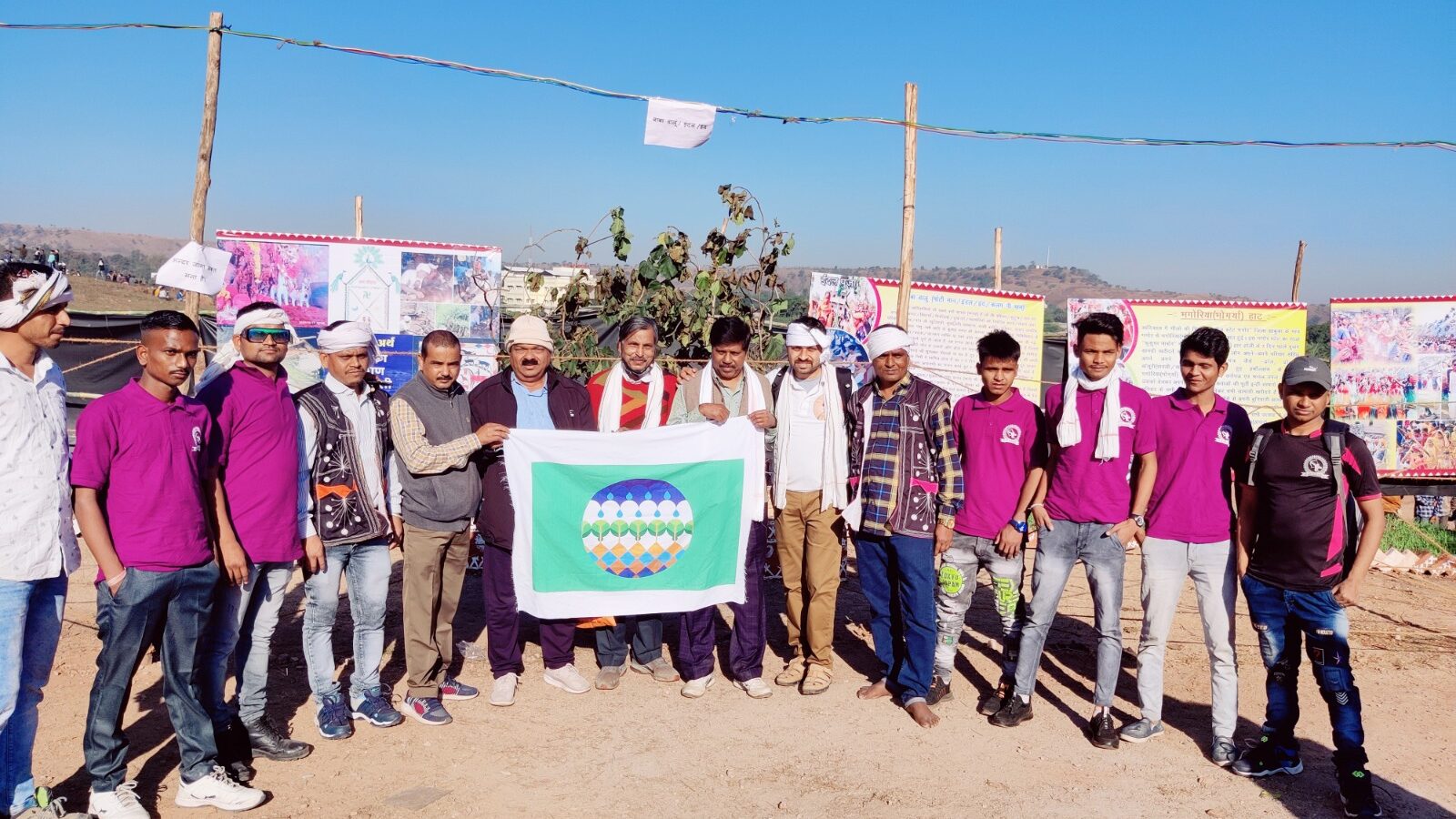
This event marked the beginning of a new movement for Indigenous unity across India.
National Representation in Delhi
21 August 2021 – Delhi
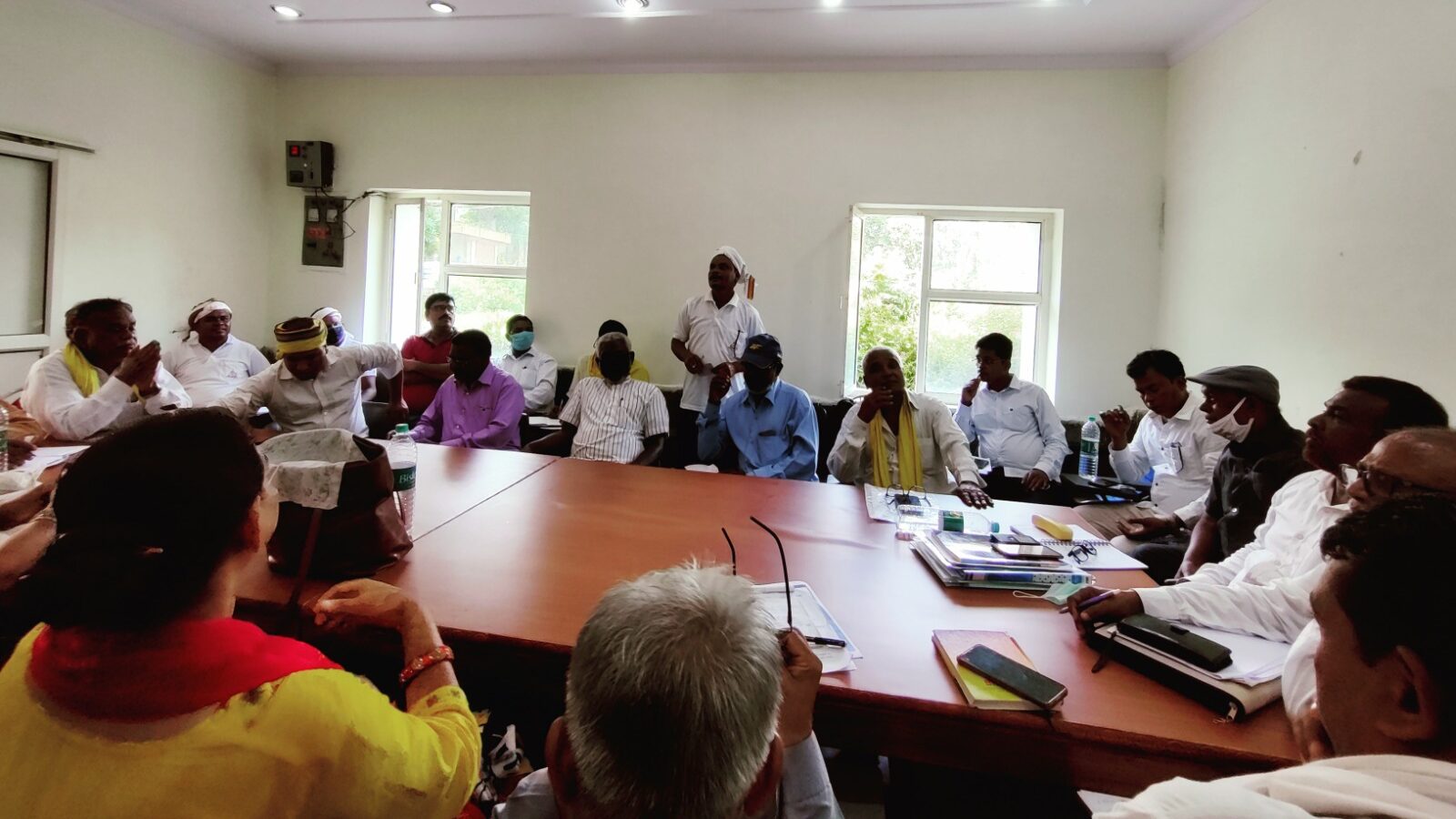
The India Indigenous Flag reached the national stage when it was presented during the meeting of the Rashtriya Adivasi Dharm Samanvay Samiti held in Delhi.
On this occasion, Mr. Praful C. Patel represented the vision behind the flag and shared the concept of creating one common Indigenous identity for tribal communities throughout India.
Representation in Gandhinagar
17 October 2021 – Gandhinagar, Gujarat
Continuing its journey, the India Indigenous Flag was once again presented during a meeting of tribal leaders from across Gujarat held in Gandhinagar on 17 October 2021.
The presentation further strengthened the movement towards bringing tribal communities together under one common Indigenous symbol.
Why the India Indigenous Flag Matters
The India Indigenous Flag is not intended to replace the unique identities of individual tribes, clans, languages, or cultures.
Instead, it stands as a symbol of:
- Indigenous Unity
- Shared Heritage
- Cultural Pride
- Mutual Respect
- Collective Representation
- National Solidarity
Just as India has one National Flag that unites people of countless religions, cultures, and languages, the India Indigenous Flag aspires to unite all tribal communities while preserving the individuality of every tribe.
Every clan, every tribe, and every Indigenous community continues to retain its own customs and traditions—but together they can proudly stand beneath one common Indigenous identity.
A Vision for the Future
The dream behind the India Indigenous Flag extends beyond Gujarat or any single region.
It is a vision where every Indigenous tribal community—from the forests of Central India to the hills of the Northeast, from the deserts of Rajasthan to the Western Ghats, and from the Himalayas to the coastal belts—can proudly say:
“We belong to different tribes, but we are one Indigenous family of India.”
The flag represents unity without uniformity. It celebrates diversity while building solidarity.
It is a symbol created not for one tribe, but for every Indigenous person who believes in preserving our shared heritage for future generations.
EXPLAINATION OF FLAGS PARTS
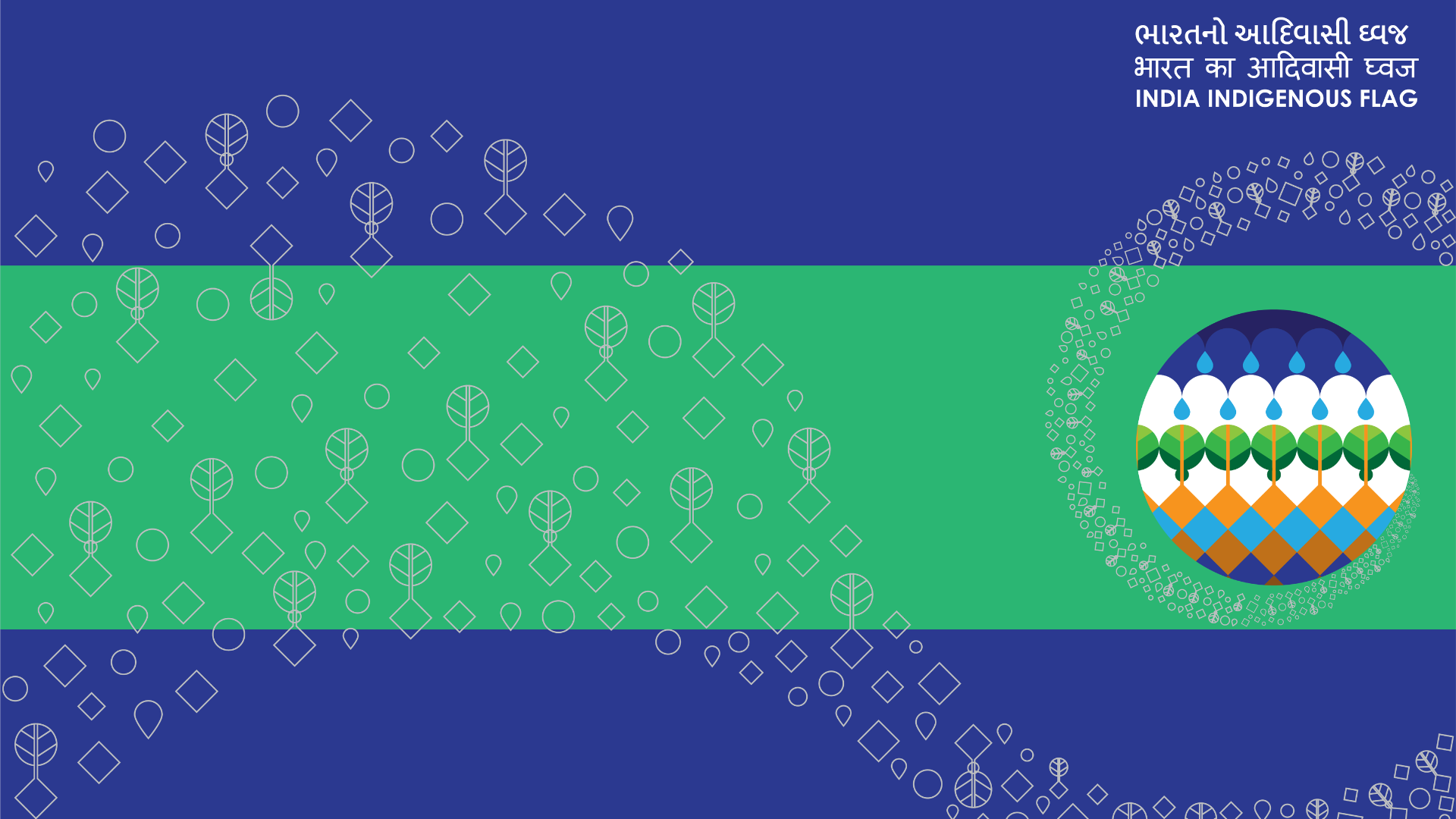
ધ્વજનો લીલો રંગ આપણાને આપણી ધરતી હરિયાળી રાખવાનું સૂચવે છે.
ध्वज का हरा रंग हमें अपनी धरती को हरा-भरा और समृद्ध बनाए रखने का संदेश देता है।
The green color of the flag reminds us to keep our Earth green and thriving.


ધ્વજના મધ્ય ભાગમાં દર્શાવેલ મોટું વર્તુળ એ આખી પૃથ્વી તરીકે દર્શાવવામાં આવેલ છે.
ध्वज के मध्य भाग में दर्शाया गया बड़ा वृत्त संपूर्ण पृथ्वी का प्रतीक है।
The large circle in the center of the flag represents the entire Earth.
વર્તુળની ઉપરના ભાગમાં દર્શાવેલ ઘટ્ટ ભૂરો વાદળી રંગ એ અંતરીક્ષનુ સુચન કરે છે /દર્શાવેલ છે.
वृत्त के ऊपरी भाग में दर्शाया गया गहरा भूरा-नीला रंग अंतरिक्ष का प्रतीक है।
The dark brownish-blue color shown in the upper part of the circle represents outer space.


એની નીચેનો ભૂરો વાદળી રંગ એ આકાશનું સૂચન કરે અથવા દર્શાવે છે.
इसके नीचे दर्शाया गया भूरा-नीला रंग आकाश का प्रतीक है।
The brownish-blue color below it represents the sky.
આ ધ્વજમાં જળચક્ર દ્વારા મોટા વર્તુળની અંદર આછા વાદળી રંગના ટીપાંએ વરસાદનું સ્વરૂપ તેમજ હવામાનમાં ભેજ સ્વરૂપે રહેલ જળ દર્શાવે છે.
इस ध्वज में जलचक्र के माध्यम से बड़े वृत्त के भीतर दर्शाई गई हल्के नीले रंग की बूंदें वर्षा तथा वातावरण में नमी के रूप में विद्यमान जल का प्रतीक हैं।
In this flag, the light blue droplets inside the large circle represent rainfall and the moisture present in the atmosphere as part of the water cycle.


સફેદ રંગ જળ, જંગલ અને જમીનનું રક્ષણ કરવાથી મળતી શુધ્ધ હવા તેમજ શાંતિનું પ્રતિક છે.
सफेद रंग जल, जंगल और भूमि के संरक्षण से प्राप्त होने वाली शुद्ध वायु तथा शांति का प्रतीक है।
The white color symbolizes the clean air and peace that result from protecting water, forests, and land.
વર્તુળની મધ્યમાં આવેલા નાના વર્તુળો આપણા જંગલોનો નિર્દેશ કરે છે તેમજ સાથોસાથ પોપટી લીલા રંગોથી લઈને ઘટ્ટ લીલા રંગો જંગલનું જીવનચક્ર સૂચિત કરે છે. જંગલોની આકૃતિ માં નીચે જોવા મળતા સોનેરી તથા કથ્થાઈ રંગોની ચોરસ આકૃતિઓ આપણ ને જંગલ અને જમીન વચ્ચેનો ગાઢ સંબંધ દર્શાવે છે.
वृत्त के मध्य में स्थित छोटे-छोटे वृत्त हमारे वनों का प्रतिनिधित्व करते हैं। इनमें हल्के हरे से लेकर गहरे हरे रंगों का प्रयोग वनों के जीवनचक्र को दर्शाता है। वनों की आकृति के नीचे दिखाई देने वाले सुनहरे तथा भूरे रंग के चौकोर आकार जंगल और भूमि के बीच के गहरे एवं अविभाज्य संबंध का प्रतीक हैं।
The small circles at the center of the larger circle represent our forests. The shades ranging from light green to deep green symbolize the life cycle of forests. The golden and brown square shapes beneath the forest design represent the deep and inseparable relationship between forests and the land.

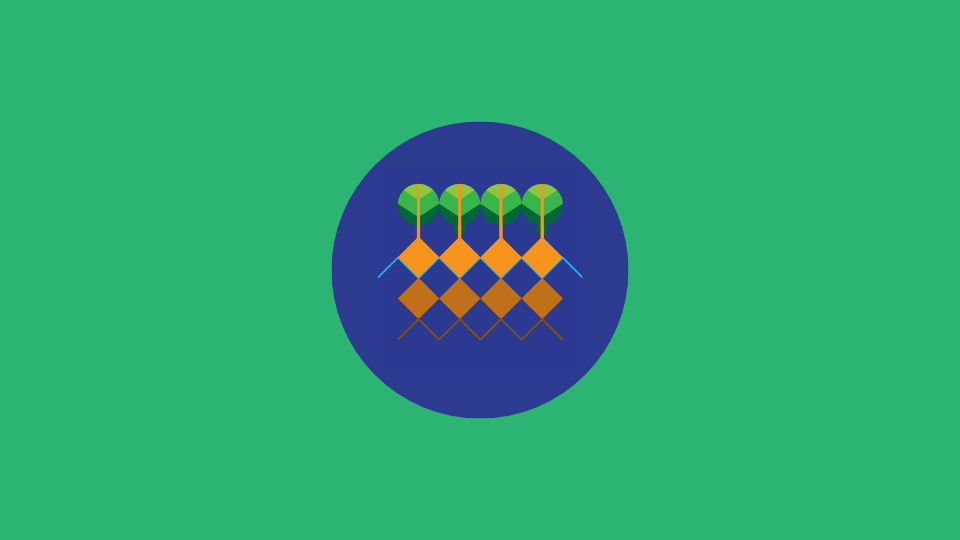
આ ઝાડ અને જમીનની આકૃતિને એક સાંકળ ની જેમ હરોળ માં દર્શાવ્યા છે જે સૂચવે છે કે આપણી સંસ્કૃતિમાં સ્ત્રી તથા પુરુષને એક સમાન જોવામાં આવે છે. આપણે આદિવાસીઓના વિવિધ નૃત્યો જોઈએ તો તેમાં પણ આ જ રીતે સ્ત્રી અને પુરુષ એક સાંકળ બનાવીને નૃત્ય કરતાં હોય છે.
वृक्ष और भूमि की इन आकृतियों को एक श्रृंखला के रूप में क्रमबद्ध दर्शाया गया है। यह हमारी संस्कृति में स्त्री और पुरुष की समानता का प्रतीक है। हमारे विभिन्न आदिवासी नृत्यों में भी स्त्री और पुरुष इसी प्रकार एक-दूसरे का हाथ थामकर श्रृंखला बनाकर सामूहिक नृत्य करते हैं।
The tree and land motifs are arranged in a continuous chain, symbolizing the equality of women and men in our culture. This is also reflected in the various Indigenous tribal dances, where women and men join together in a chain to perform as one community.
ચારેય રંગોના ચોરસ ભેગા મળતા એક વિશિષ્ટ આકૃતિ બને છે જેમાં ઉપરના ભાગે સોનેરી ચોરસ ડુંગરો દર્શાવે છે.મધ્યમાં ભૂરા રંગના ચોરસ ડુંગરના ગર્ભમાં રહેલ જળ દર્શાવે છે અને નીચે કથ્થાઈ અને ભૂરો વાદળી રંગના ચોરસ ભૂગર્ભમાં રહેલ ખનિજ દર્શાવે છે.
चारों रंगों के वर्गाकार आकार मिलकर एक विशिष्ट आकृति का निर्माण करते हैं। इसका ऊपरी सुनहरा भाग पर्वतों का प्रतीक है। मध्य में स्थित भूरे रंग के वर्ग पर्वतों के गर्भ में विद्यमान जल को दर्शाते हैं, जबकि नीचे स्थित कत्थई और भूरे-नीले रंग के वर्ग भूमिगत खनिज संपदा का प्रतिनिधित्व करते हैं।
The square elements in all four colors come together to form a distinctive pattern. The golden squares at the top represent the mountains. The brown squares in the middle symbolize the water stored within the mountains, while the brown and brownish-blue squares at the bottom represent the mineral resources found beneath the Earth’s surface.


આ રીતે ભારતનો આદિવાસી ધ્વજ એ પ્રેરણા આપે છે કે આપણે પ્રકૃતિમાં રહીને પ્રકૃતિ સાથે જોડાઈને પ્રકૃતિને સાચવીએ, કારણકે પ્રકૃતિ આપણા પર નહિ આપણે પ્રકૃતિ પર નિર્ભર છીએ.
इस प्रकार भारत का आदिवासी ध्वज हमें यह प्रेरणा देता है कि हम प्रकृति के साथ सामंजस्य बनाकर रहें, उससे जुड़े रहें और उसका संरक्षण करें, क्योंकि प्रकृति हम पर निर्भर नहीं है, बल्कि हम प्रकृति पर निर्भर हैं।
Thus, the Indigenous Flag of India inspires us to live in harmony with nature, remain connected to it, and protect it, because nature does not depend on us—we depend on nature.
The INDIA indigenous flag is designed by
Hitalkumar Z Patel (Dhodia)
Commercial Applied Artist
Conclusion
The creation of the India Indigenous Flag is a historic initiative born from the vision of Mr. Praful C. Patel, brought to life through the artistic work of Mr. Hitalkumar Patel, and made possible by the unwavering support of the leadership and members of Samast Adivasi Samaj, Surat, along with tribal leaders across India.
This flag is more than a piece of cloth—it is a movement, a vision, and a declaration that the Indigenous people of India, while proudly preserving their individual tribal identities, can stand together as One Indigenous Community, One Voice, and One Future.



 English
  हिन्दी
You must be logged in to post a comment.